Hackers & Painters, Paul Graham
 0xneferttUpdated
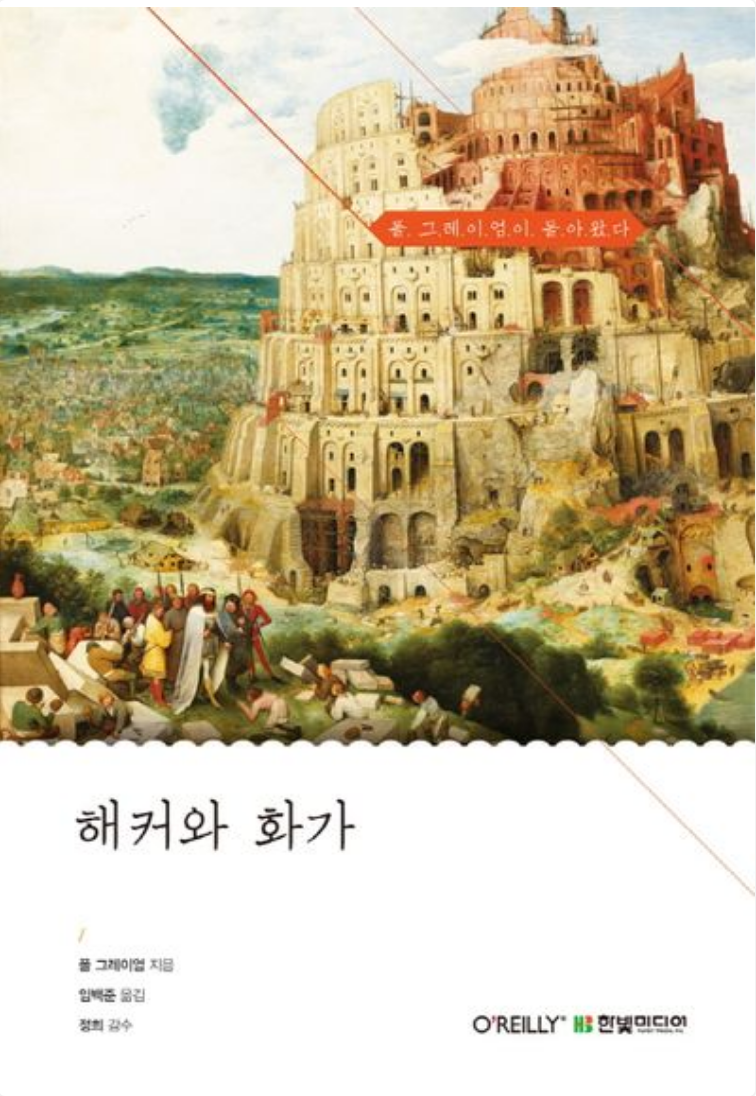
A little while ago, I read “Hackers & Painters” by Paul Graham. From the title alone, it might be hard to get a sense of what the book is about. That was the case for me, too. Interestingly, although this is a book about computers, it also contains a great deal of material related to the humanities. It was even written 20 years ago, yet it does not feel outdated at all when read today. If anything, there was a lot to learn from it. It reminded me of the saying, “True quality never goes out of style.” Throughout the book, I repeatedly found myself impressed, underlining passages as I read.

After finishing the book, I wanted to learn more about its author, Paul Graham, so I looked him up. Graham was someone who loved the programming language Lisp more than anyone. He used Lisp to create a programming language called Arc, and then built a discussion board using it. That discussion board is Hacker News, which we often come across.
Although it was not mentioned in the book, he also founded Y Combinator and served as its first president after selling Viaweb to Yahoo. That is why the Hacker News logo is a “Y.” During Paul’s time at Y Combinator, it invested in companies such as Reddit, Twitch, and Heroku, establishing itself as a successful accelerator. Then, in 2014, he reportedly handed over the presidency to Sam Altman, whom we know well as the CEO of OpenAI.

Usually, when we hear the word “hacker,” it is easy to picture someone who uses computers to steal other people’s data or do something illegal. But the meaning of “hacker” in this book is closer to someone who knows a great deal about computers or is skilled at working with them. In a way, the word also carries a sense of being a creator, and the book draws parallels with painters, novelists, and architects. That is why it is called Hackers & Painters. The book uses the word “bookworm” to describe hackers. In today’s terms, perhaps “geek” or “an engineering nerd guy(?)” would give a similar impression.
Try reading the following passages from the perspective that “software = a building = a work of art.”
- “The only external way to measure whether software is beautiful is time. As time passes, beautiful things spread, and ugly things disappear.”
- “If you do not truly love something, you cannot do it really well. Likewise, if you truly love hacking, you will find it unbearable not to work on your own projects.”
- “Most software, like paintings, is made for people. To create great work, hackers, like painters, must be capable of empathy. In other words, they must be able to see things from the user’s perspective.”
Perhaps these ideas seem so obvious that reading them leaves you unmoved. If so, ask yourself honestly: Who is the work I am doing right now for? I think the answer to that question is the most important message in this book, and that the question itself should be fundamental to every field. Yet we often go through life forgetting what is fundamental.

Do you want to be rich? Most people around the world probably do. It might be harder to find someone who would turn down the chance to become wealthy.
This book also discusses how to get rich. Unfortunately, the method it describes is not about investing in real estate, stocks, or cryptocurrency. Having founded Viaweb and sold it to Yahoo, Paul explains how to get rich from a founder’s perspective. This, too, may feel unrealistic to us, but it also makes me wonder whether we have forgotten the fundamentals and are simply going through the motions.
- “There are only two things you need to know about business: make something users will like, and earn more money than you spend.”
- “A company is ultimately nothing more than a group of people coming together to do something people want.”
- “To become rich, you need to be in an environment with two things: fair evaluation and influence. First and foremost, you need to be somewhere people’s abilities are evaluated fairly. Otherwise, it is impossible to earn more by working more. At the same time, you also need influence. This means you need to put yourself in a position where the decisions you make can have a significant impact.”
- “People’s greatest motivation is always not the hope of gaining something, but the fear of losing something.”
- “If you want something, you must either make it yourself or work to earn the money to buy it. In the real world, wealth is not something Dad hands out; it is something you have to create yourself (except for special cases such as thieves or gamblers).”
From this perspective, real estate, cryptocurrency, and stocks do not count as ways of becoming rich. Since the pandemic, many people have become interested in investing, but at the same time, the number of related scams has also increased, and people continue to fall victim to them. It is called investment, but it is speculation. With Bitcoin’s recent surge in price, people’s interest is rising again. There will be newly wealthy people who have built their fortunes through cryptocurrency. This could be seen as a redistribution of wealth, but I personally take a pessimistic view of this phenomenon. That is because most efforts to grow one’s personal wealth are ultimately not activities undertaken for someone else.

Finally, the book discusses ways to produce good work from a creator’s perspective.
- “Good design is simple. Making something look simple and easy is only possible through countless hours of practice.”
- “Simply copying without knowing what you are doing is a shortcut to bad design. If you do not know where your ideas come from, you are making an imitation.”
- “Good design is hard. What the people who have created great works have in common is that they put in an enormous amount of effort. If you are not putting in an enormous amount of effort right now, you are wasting your time.”
- “People who produce good work often think they are making something poor while they are working on it. Other people look at the work and think it is amazing, but the creator sees only its flaws. This pattern is no coincidence. Worry is what produces good work.”
- “Focus on ‘what is needed,’ rather than ‘what is wanted.’”
- “Although it may depend on the field of art, there is no field in which someone who merely follows the customer’s wishes produces the best work.”
As you read this book, you may feel that some of its content is somewhat closer to a self-help book. Still, it is very much written from the perspective of a programmer and entrepreneur. Although I have not mentioned them in this post, the book actually contains many IT terms. Without the relevant background knowledge, you might find parts of it a little dull. But if what you have read above has caught your interest, I recommend giving it a read.
The reason I feel this book has not gone out of style, even a full 20 years after its publication, is probably that it deals with the fundamentals. As we go through life, we often forget what is fundamental. This is the kind of book that brings those things we have forgotten back to mind.